
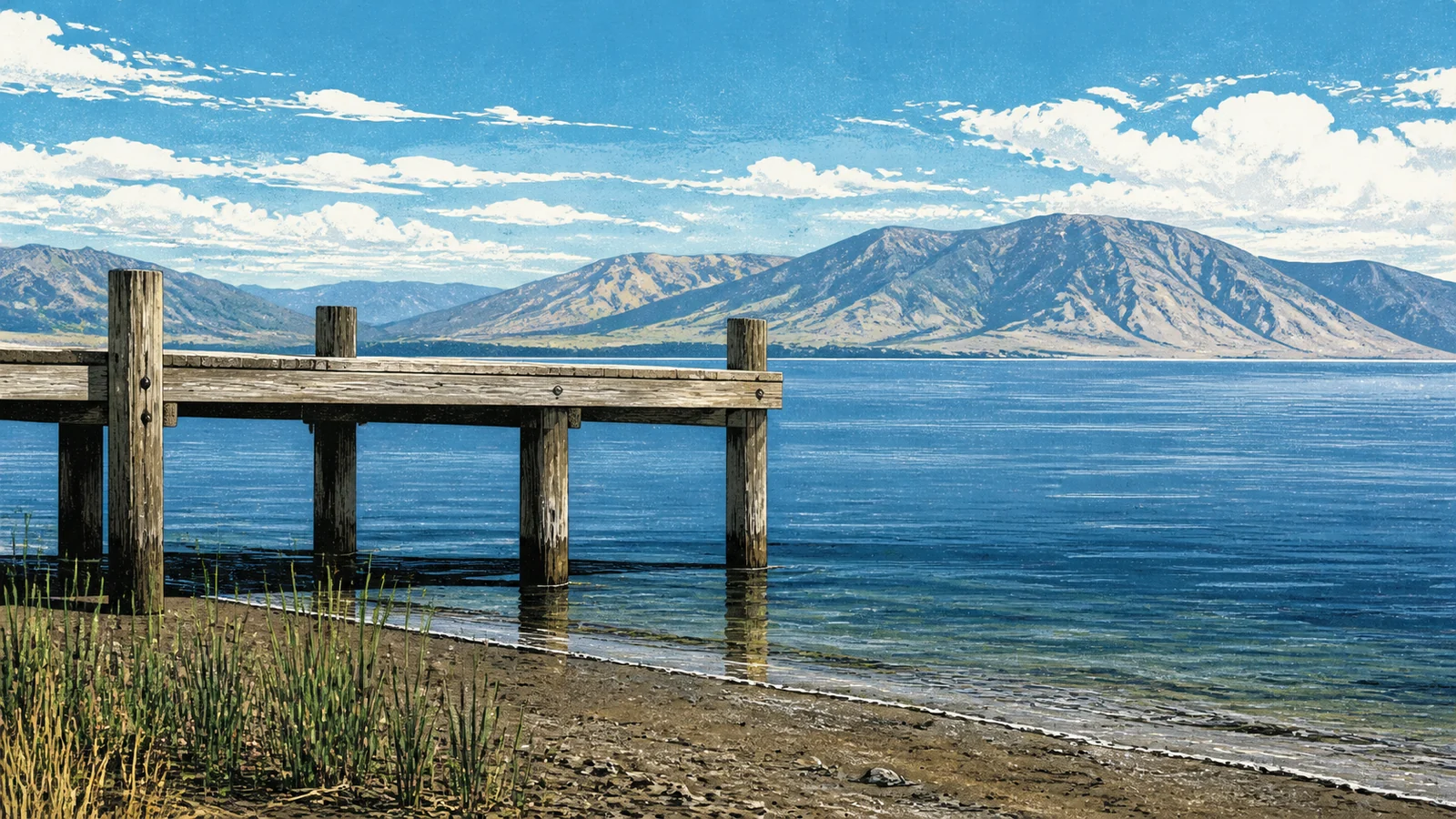
Utah Lake Water Level
Current water level and what it means for fishing access, boat ramp availability, and fish behavior patterns.
Automatic check: 10/15/2026, 6:00:42 AM MDT. Some sources are unavailable; retained readings keep their original dates.
Official park sourceKey Levels
How Water Level Affects Access
All ramps accessible. Excellent boat access everywhere.
Most ramps usable. Some shallow ramps may have limited access.
Several ramps become difficult. Shore fishing access changes significantly.
Many ramps closed. Extended mudflats. Shore access limited.
Understanding Utah Lake Water Levels
Utah Lake's water level is one of the most significant factors affecting fishing access and fish behavior. The lake's "compromise level" of 4,489.0 ft was established to balance competing water needs — agricultural irrigation, municipal supply, environmental flows, and recreation.
Water level fluctuates seasonally: typically rising during spring snowmelt (April-June) and declining through summer and fall as irrigation withdrawals increase and evaporation reduces inflow. Multi-year drought cycles can significantly reduce levels, as seen during the historic low in 2022.
How Low Water Affects Fishing
When water levels drop, shallow areas become exposed mud flats, reducing available fish habitat. Boat ramps on the west and south shores become difficult or impossible to use. Fish concentrate in deeper areas, which can actually improve fishing if you can reach them. Shore fishing access changes dramatically — some spots become better as fish are pushed closer, while others become inaccessible.
How High Water Affects Fishing
High water opens up additional habitat, particularly in vegetated shallows that bass and panfish prefer. All boat ramps become accessible. Shore fishing improves at most locations. However, fish can spread out more, making them harder to locate. High water can also bring increased turbidity from flooding tributaries.
Check Boat Ramp Conditions
See which boat ramps are usable at the current water level.